Quick Review
Short on time? Here is the article in 30 seconds.
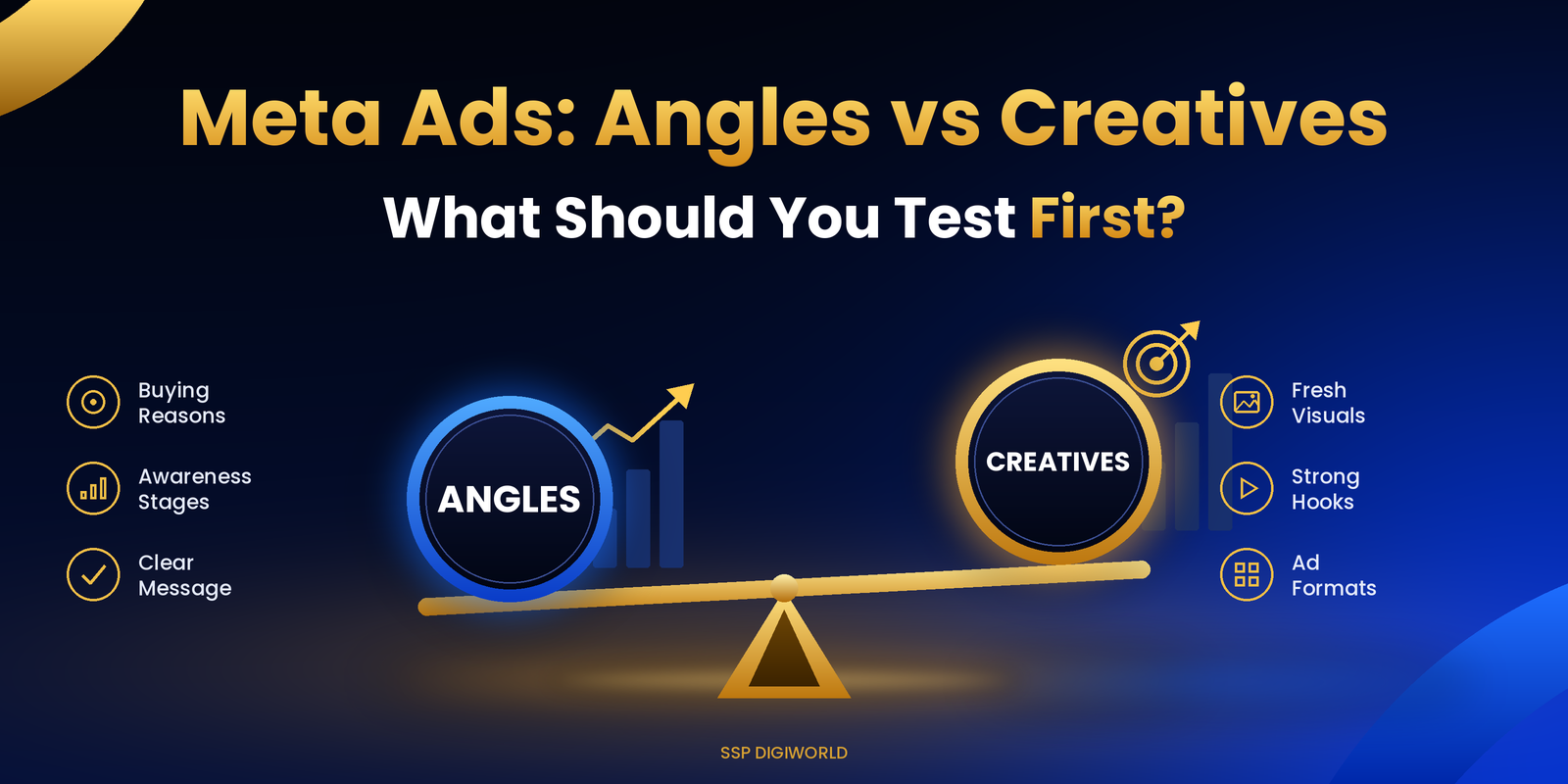
A new creative is not a new angle. If the message stays the same, you are testing the same buying reason.An advertising angle is a specific reason why someone should buy from you.
Match your message to the buyer's awareness stage: Problem Unaware, Problem Aware, Solution Unaware or Solution Aware.Test different reasons to buy, such as price, quality, convenience, unique features and customer results.Ask "How many different reasons can we give people to choose this brand?" instead of "How many creatives can we make?"
If you run Meta Ads, you have probably tested a few creatives. A new colour, a different background, a fresh hook in the first line. The results come back flat, and it is tempting to blame the budget, the audience or the platform.Often the real issue is simpler. Every ad is saying the same thing.
This article explains the difference between a new creative and a new advertising angle, how buyer awareness stages shape what your ads should say, and how to start testing angles in your next Meta Ads campaign.
Different Creatives, Same Message
Changing colours, visuals, backgrounds or hooks does not always mean you are testing a new advertising idea.If the core message stays the same, you are still speaking to the same buying motivation.
For example, imagine five ads for a bookkeeping service. One has a blue background, one has a photo of a person at a desk, one uses a question as the headline. But all five say "we make your bookkeeping easier." To the person scrolling, these feel like the same ad in different outfits.
Creative variations are not the same as new advertising angles. Both have a place, but only one tells you why people choose you.
What Is an Advertising Angle?
An advertising angle is a specific reason why someone should buy your product or service.
Different people have different reasons to buy. Some want to save time. Others look for better quality, affordability or reliable results. That is why one message does not work for everyone.
When you test angles, you are not testing how an ad looks. You are testing which reason connects with which kind of buyer.
Understanding Buyer Awareness Stages
Your audience is not at the same point in their buying journey. One product can meet four different buyer mindsets, depending on how much the person already knows. Your messaging should change with their awareness stage.
Problem Aware
Problem Unaware
Solution Unaware
Solution Aware
These people do not recognise the problem yet. They are not searching for a solution because they do not think anything is wrong.
Your ad needs to make them notice something they have not noticed before. Using the bookkeeping example, this could be a simple question: "How many hours did you spend on paperwork last month?"
These people know the problem but may not know how to solve it. They feel the frustration, but they have not found a clear path forward.
Your ad should highlight and reinforce the problem they already experience, then point towards a way out. For example: "Still chasing receipts before every BAS deadline?"
These people know solutions exist but do not understand why yours is different. They may be comparing several options, or assuming they are all similar.
This is where your unique selling proposition (USP) matters. Show what makes your product or service different, in plain words and with specifics.
These people already know about your solution. What they need now is proof before making a decision.
Build trust with testimonials, customer reviews, results and other evidence. Real customer experiences carry more weight here than another round of claims from your brand.
Matching Your Message to the Awareness Stage
Here is a quick way to think about it.
Problem Unaware: Make them recognise a problem they have not noticed.
Problem Aware: Highlight and reinforce the problem they already experience.
Solution Unaware: Show what makes your product or service different, and highlight your USP.
Solution Aware: Build trust with testimonials, customer reviews, results and other proof.
If you show a testimonial to someone who does not yet see a problem, it will not land. If you explain the problem to someone who is ready to buy, you are slowing them down. Matching the message to the stage is what makes the angle work.
Five Angles Worth Testing
Instead of creating five ads with almost the same message, explore five different reasons why someone might choose your brand. You can test:
Price and affordability
Quality and durability
Convenience and time-saving
Unique features
Customer experiences and results
Each angle gives you a different messaging direction to test. Not every angle will suit every business, so start with the ones that fit your product and what your customers already tell you.
How to Start Testing Angles in Meta Ads
You do not need a complicated setup. A simple approach is enough to begin.
1. List the reasons people buy from you. Use customer questions, reviews and sales conversations as your source.
2. Pick three to five angles from that list.
3. Keep the creative format similar across the ads, so the message is the main thing that changes.
4. Run the ads long enough to compare results fairly, and judge them on the same goal.
5. Keep the angles that perform well and build new creatives around them.
The point is to learn which reason matters to your audience, then put more weight behind it.
Common Mistakes to Avoid
1. Changing too many things at once, so you cannot tell what made the difference.
2. Writing every ad for the same awareness stage.
3. Treating one winning angle as permanent. Audiences and markets change, so keep testing.
4. Making claims you cannot back up. Clear and honest messaging builds more trust than big promises.
Final Takeaway: Better Ad Testing Starts With Better Angles
Do not just ask, "How many creatives can we make?"Ask, "How many different reasons can we give people to choose this brand?"Understand your audience. Match their awareness stage. Test different angles.
Need Help With Your Meta Ads?
At SSP DigiWorld, we help businesses plan and run digital marketing campaigns that focus on what their customers actually care about. If you would like to talk about your Meta Ads strategy, get in touch with our team.